Ecology Curriculum Home
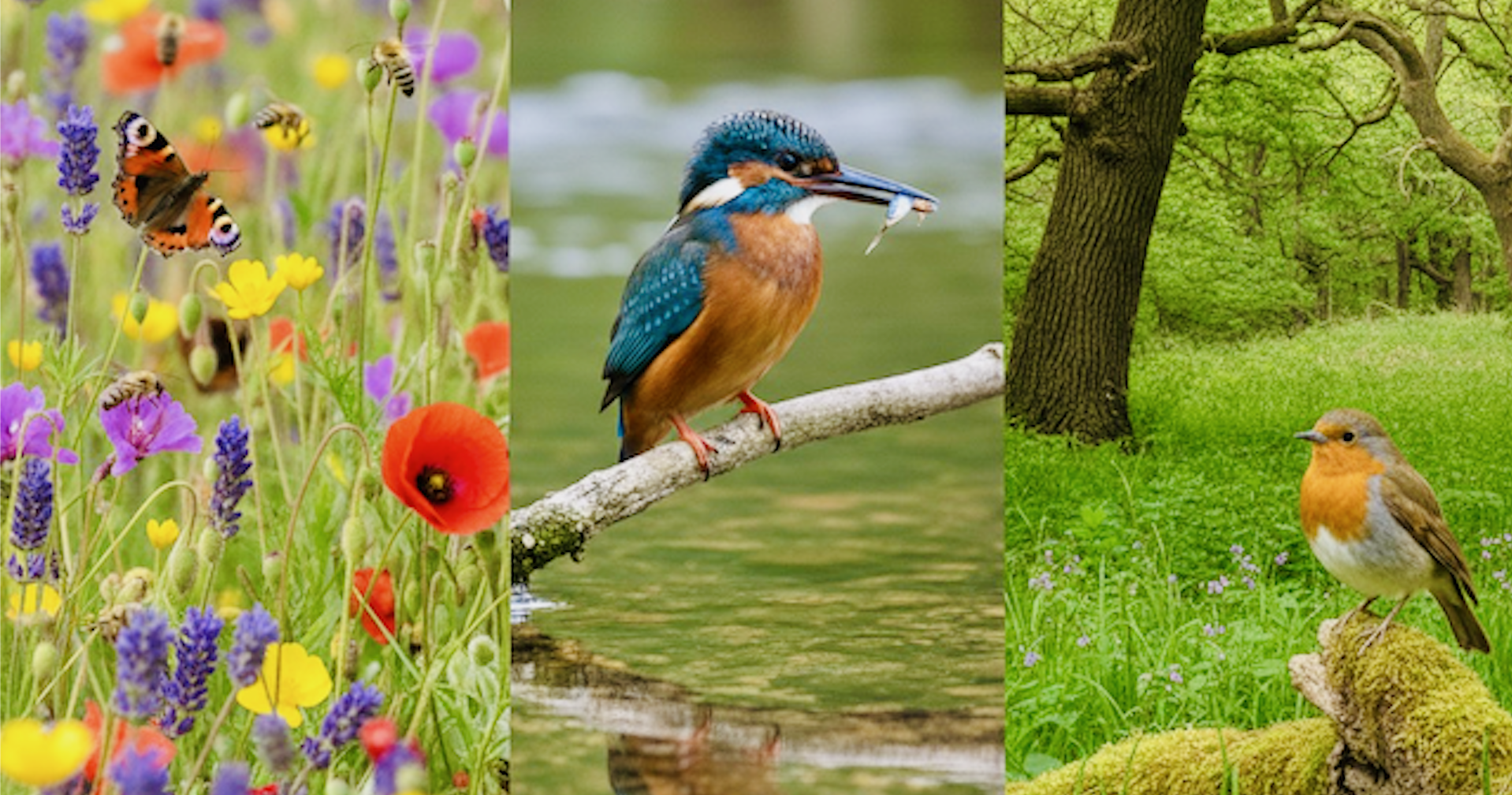
Welcome and Introduction
This website provides free learning resources for primary school teachers, parents, and anyone who wants to find material to help teach or learn about ecology and nature.
Ecology is the study of how living things interact with each other and their environment, while Nature is the living world and the physical surroundings that sustain it.
All text is free to copy and use as you wish. The images are from Wikimedia Commons, which provides freely usable media files as long as you comply with the licence, which usually is that the creator is credited. You can click on the images in this site to see who created them and read their licence. You can read more about reuse of images on the Wikimedia Commons reuse page
The content is structured in the same way as the UK National Curriculum and is intended to be used as an additional resource for teachers or parents seeking to find examples from nature and ecology to use in their classes or with their children.
The idea is to bring the curriculum to life with colourful examples and fun facts and activities; to create memorable learning experiences that raise awareness of nature and encourage curiosity and interest in understanding the interplay between ecosystems in which we all live and with which we all interact.
Teaching Resources
Teaching resources are structured in the same way as the national curriculum. The parts of the national curriculum for which the resources are provided will be quoted and referenced at the top.
Science
Key Stage 1: Years 1 & 2 (Ages 5-7)
This stage is about enabling pupils to experience and observe phenomena, encouraging curiosity and questions about the world around them. Learning should be rooted in first-hand practical experiences.
Years 1 and 2: Working Scientifically
Year 1: Animals, including humans
Year 2: Living things and their habitats
Year 2: Animals, including humans
Lower Key Stage 2: Years 3 & 4 (Ages 7-9)
Pupils should broaden their scientific view of the world, exploring, talking about, testing, and developing ideas about everyday phenomena and the relationships between living things.
Year 4: Living things and their habitats
Year 4: Animals, including humans
Upper Key Stage 2: Years 5 & 6 (Ages 9-11)
Pupils should develop a deeper understanding of a wide range of scientific ideas, encountering more abstract concepts and recognising that scientific ideas change over time.
Year 5: Living things and their habitats
Year 6: Living things and their habitats
Year 6: Evolution and inheritance
Geography
Content Overview
The resources are organised by topic. Each page is designed to be a self-contained resource and typically includes:
Topic
Curriculum Requirement
Boxes formatted like this contain text directly copied from the national curriculum
Nature Examples
Specific, real-world examples to illustrate the topic, each supported by factual information.
💡 Fun Facts
- Fun facts related to each example to bring the examples to life and help create memorable learning experiences.
Individual, pair, group, and class activities
A list of suggested classroom or outside activities designed to reinforce the concepts presented and provide additional modes of learning.
Reflections
Short, end-of-lesson plenary activities designed to consolidate learning and encourage pupils to reflect on what they have learnt.
How to Use This Site
The content is intended to be a reference for lesson planning and a source of examples. The Nature Examples, Fun Facts, Activities, and Reflections are designed to work together to create engaging and memorable learning experiences. You can read more about the educational thinking behind this structure on the Teaching Principles page. The text is free to use and can be copied directly for integration into other educational materials. Remember to use CTRL+SHIFT+V to paste as text only, or right click, select Paste special..., Unformatted Text. Share this site with anyone you think would find it interesting, useful, or fun!
Additional Resources
About the content
This website provides nature and ecology examples for each of the learning requirements listed in The national curriculum in England: Primary curriculum, Key Stages 1 & 2.
Ref: https://www.gov.uk/government/publications/national-curriculum-in-england-primary-curriculum
These Teaching Principles used to create the learning resources were used to create content that is engaging and memorable.